Camp Cooking Without a Grate: Stone, Coal, and Hangers
A grate is a convenience, not a requirement. Most camp cooking fails because the fire is the wrong shape for the job: flames where coals were needed, or a coal bed too small to keep heat under a pot. If you can build and control coals, the equipment list shrinks to a pot, a lid, and something to lift it with.
Match the fire to the job
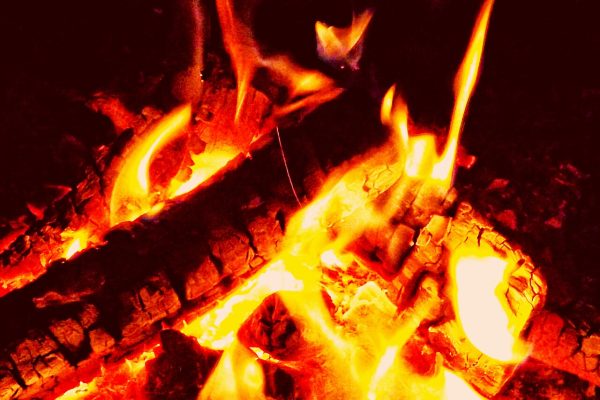
Boiling wants a bed of coals wider than the base of the pot and about three fingers deep, glowing evenly, with almost no flame. Flames lick up the sides, soot the pot, and waste fuel, and they are much hotter at the tips than the pot needs. Once a pot is at a rolling boil, coals alone will hold it there.
Grilling and toasting want flame or a hot spot you can move food across. That is a different fire, built small and fed continuously at one end. Trying to do both jobs on one fire at once is where most of the frustration comes from, so either build a keyhole shape with a coal bed at the wide end and a small flame at the neck, or accept that you will cook in two passes.
Wind matters more than most people expect. A fire that looks healthy in still air loses most of its heat to a breeze, and a pot that boiled in five minutes at dusk takes fifteen when the wind picks up. A low wall of stones or logs on the windward side, at least a hand’s width from the flames, fixes most of it.
Cooking on stone
Flat stones work as a surface for flatbread, eggs, and thin cuts of meat. The rules are simple and the consequences of ignoring them are not. Never use stones from a river or a lakeshore, because water trapped inside expands when heated and the stone can split violently, throwing fragments. Never use shale or slate for the same reason. Look for dry, dense, igneous rock that has been above the waterline for a long time.
Warm the stone slowly at the edge of the fire for ten or fifteen minutes before moving it over coals. A cold stone dropped onto a hot bed is the most common way to break one. Once it is hot, it holds temperature well and gives you a cooking surface with no washing up.
For bread, a stone is better than a pan because it does not need oil and does not scorch the base before the middle sets. A stiff dough of flour, water, salt, and a little fat, pressed to a thickness of a finger, cooks in a few minutes a side. Test by tapping the top: a hollow sound means it is done.
Working with coals directly
Root vegetables, corn in the husk, and foil-wrapped food can go straight into the coal bed, buried an inch or two below the surface and covered with more coals. Turn them once at the halfway point. The advantage is that coals transfer heat evenly and slowly, which forgiving food like potatoes and onions reward.
For a pot, three stones the size of your fist set in a triangle give you a stable base and a gap underneath for air and coals. Rake a small amount of coal under the pot rather than building a fire around it, and replenish from the side so you are not lifting a hot pot to feed the fire.
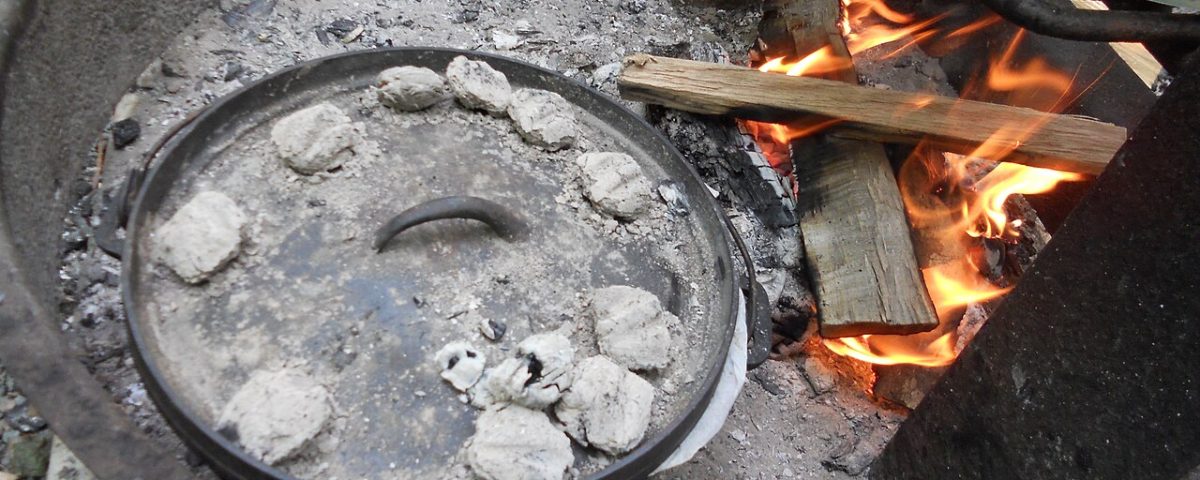
A lidded pot with a shallow layer of coals on the lid turns into a passable oven. This works for bannock, biscuits, and anything that wants heat from above. Watch the lid: coals on a thin lid warp it and can crack enamel.
Hanging a pot at a height you can control
The single most useful cooking tool you can make at camp is a crossbar between two forked stakes, with a hanger that slides along it. Height controls temperature far more precisely than fire size, and moving a pot up two fingers is faster than waiting for a fire to die down.
Use green wood for the crossbar and the stakes. Dry wood catches, and a crossbar directly over a fire will char through within an hour if it is seasoned. Green hardwood, stripped of bark, holds structure long enough for a meal and does not flame.
Tripods look tidy and are harder to adjust. The three legs converge over the fire, which means the lashings or the wire at the top sit in the hottest part of the plume. If you use one, bind with wire rather than cord, and keep the joint high enough that flames do not reach it.
Site rules and cleanup
Use an established fire ring where one exists, keep the fire small, and burn only dead and downed wood unless local rules say otherwise. Many areas prohibit collecting wood entirely, and some prohibit open flame in summer. Check before you travel rather than at the trailhead, because the rules that matter are often seasonal and local.
Soot comes off a pot with ash and a handful of sand, or with a paste of fine dirt and water. Skip the soap, which leaves a residue and does not belong in the ground. Foil and packaging leave with you; burying them is not disposal, and burnt foil scraps in a fire ring are the clearest sign that someone did not finish the job.
When this fails
Stone cooking fails when the rock is wet, layered, or from a watercourse, and when the fire is too hot too fast. Coal cooking fails in sustained wind, heavy rain, and at altitude where the fire burns cooler and the pot never reaches a boil. Thin aluminium pots concentrate heat at the base and scorch food long before the middle cooks, which is a pot problem no fire arrangement fixes.
If you cannot build and hold a coal bed, a stove is the honest answer, and one that works in wind is worth more than any amount of technique. Cooking over fire is a skill worth having, not a moral position.
What makes the difference in practice is building the fire for the meal before you are hungry. Twenty minutes of fire tending while you are still patient produces better food than an hour of improvisation after dark.