Batoning Firewood Without an Axe: Technique and Its Limits
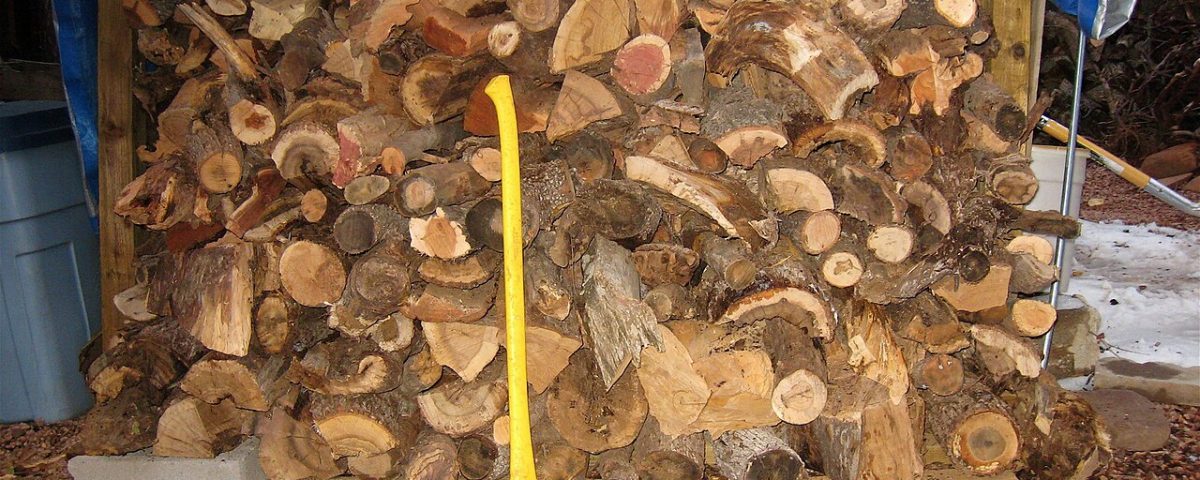
Batoning is a technique, not a personality trait. It exists for one reason: the outside of a wet or frozen round is wet, and the inside is dry, and a knife can open the round without an axe. Used inside that purpose it is efficient and safe. Used as a substitute for an axe on a pile of wrist-thick hardwood, it is how people break knives and cut their hands.
What splitting is actually for
The point of splitting is access to dry wood and to the small stuff that catches a spark. A round the width of your forearm, split into quarters, gives you dry kindling from the center and a flat surface to shave tinder from. That is the whole job on most trips: two or three rounds, opened and reduced.
If you need a stack of split wood for a long fire, you need an axe or a saw and a hatchet. A knife will do the work, slowly, with a rising chance of a stuck blade and a bent edge. The judgment is about volume: a few rounds, baton. A night’s worth of fuel, cut and split with the right tool.
Wood that splits, and wood that fights
Straight grain splits. Look at the end of the round for cracks radiating from the center and for grain lines running true down the length. A round with a knot, a fork, or spiral grain will grab the blade and hold it; leverage on a stuck blade is how tips snap.
Species matter less than condition. Softwoods with clear grain open easily but crush rather than split cleanly when frozen. Dense hardwoods need a wedge and more force, and dry dead hardwood is far more cooperative than green wood of the same species. If the round is short and the grain is straight, almost anything works.
Frozen wood is the hard case. Below freezing, the fibers bond and the round behaves like a different material; a piece that split easily in autumn will stop a blade halfway. Let frozen rounds thaw by the fire, or split them with a wedge and a heavy baton, not with a knife you like.
Striking without wrecking the knife
Set the edge into the end grain at a slight angle, with the blade square to the round, then strike the spine near the tip with a wooden baton. Work the blade down the length of the round with successive hits rather than driving it in one place. Keep the blade vertical: an angled strike twists the edge and levering sideways is what breaks tips.
Use a baton you can control, a length of branch about as thick as your wrist and longer than the round is wide. A heavier club feels effective and delivers more force than the wood or the knife wants. Keep the striking end free of knots so it does not glance. And keep your off hand above the blade line, not on the far side of the round where a slip will find it.
Once the round is split, do not pry the two halves apart with the blade. Push them apart with your hands or tap the spine. Prying is the move that opens a crack in a blade that has been overheated or ground thin.
What it costs the tool
Batoning loads the blade in a way it was not designed for: repeated shock through the spine, stress at the transition from blade to handle, and a lateral component every time the wood grabs. A full-tang blade with a thick stock and simple slab handles tolerates this. A stick tang in a hollow handle does not, and a folding knife is out of the question, because the lock is the weak part and the failure mode is the blade closing on your fingers.
Edge geometry matters too. A scandi grind with a thick bevel splits well and survives impact; a thin full flat grind cuts beautifully and takes damage from being struck. If a knife is going to be batoned, it should be built for it, and even then it should be batoned rarely.
When batoning is the wrong answer
The clearest failure is a big round with a knot. The blade goes in, the wood closes on it, and now you have a knife stuck in a log with your only tool out of action. The fix is a wedge cut from a hardwood offcut, driven with the baton, and a second wedge behind it. That is more work than an axe and less likely to end with a broken knife.
Cold makes everything worse: brittle steel, numb hands, gloves that hide where the blade is. In winter, baton less and saw more. A folding saw cuts rounds to length faster than any knife opens them, and the combination of a saw and a small axe covers the job properly.
And if the plan depends on splitting a lot of wood with a knife, the plan is wrong. Take the tool that does the work, or plan a smaller fire.
The technique is worth knowing because the day will come when the axe is at home and the wood is wet. Practice it on one round at a time, with a knife that can take it, and stop while the blade is still straight.
Most of the skill is in choosing the round, not in the strike. Pick straight, short, and dry, and the knife does very little work.