Closed-Cell Foam or Inflatable Pad on Cold Ground
Ground is the largest heat sink in a night outdoors. Cold earth pulls heat out of a body by conduction far faster than cold air does by convection, which is why a good bag on a bare mat leaves you shivering while a modest bag on a thick pad keeps you warm. The pad is not a comfort item; it is the insulation under half your body.
How the heat actually leaves
Conduction moves heat from your warmer body into the colder ground through whatever is between them. A foam pad works by trapping air in closed cells that cannot circulate, and a trapped air pocket is a poor conductor. An inflatable pad works the same way in principle, but the air inside is free to move, so warmth from your back creates a slow convection loop that carries heat to the cold edges.
That difference explains why an inflatable pad needs internal structure, reflective layers, or loose fill to reach the same insulation value as a plain foam mat. It also explains why an inflatable that loses a little air becomes dramatically colder: less thickness means less still air, and the convection loop gets shorter.
R-values are the standard measure, and they add when you stack pads. A value around two suits three-season use, three to four covers cold nights, and anything on snow wants four and up. Treat the numbers as a rough guide from a manufacturer rather than a guarantee, since they are measured on new pads in a lab.
Foam
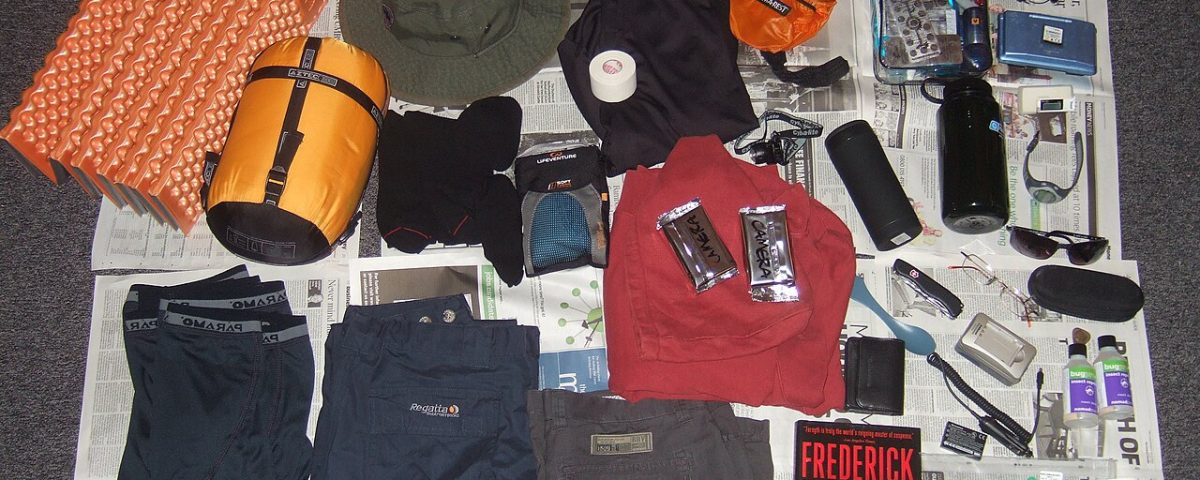
A closed-cell foam mat is the most reliable piece of sleep gear you can own. It cannot puncture, it does not delaminate, it works after being folded, sat on, and dragged, and it doubles as a sit pad, a frame for an ultralight pack, and a splint. A mat of about a centimetre gives an insulation value near two on its own, which is enough for most summer nights and as a base under anything else.
Its cost is bulk. Foam does not compress, so a full-length mat takes up the volume of a large loaf of bread in or on your pack. Short mats save weight and space at the price of leaving your legs on the ground, which is acceptable if you put your empty pack under your feet.
Foam also degrades slowly and invisibly. Repeated compression and UV exposure flatten the cells, and a mat that has spent five summers strapped outside a pack is noticeably thinner and colder than a new one even though it looks fine.
Inflatable
Inflatable pads win on comfort and packed size, and for many people comfort is what determines whether they sleep at all. Thickness of five to eight centimetres keeps hips and shoulders off the ground, which matters for side sleepers in a way no foam mat matches.
The failure modes are predictable. Punctures happen at the worst time, usually from a thorn, a sharp stone under the tent floor, or a valve that does not seat. Internal baffles can fail and create a bulge. Cold can stiffen the material and make inflation harder. None of these is catastrophic if you carry a repair kit and a foam mat as backup, which is exactly the combination most experienced winter campers use.
Valves deserve more attention than they get. A pad that is hard to inflate in the cold, or that will not stay closed, will be under-inflated at night and cold by morning. Test the valve at home, in the cold if you can, before trusting it.
Stacking and cheap substitutes
The standard cold-weather arrangement is a foam mat on the ground and an inflatable on top. The foam protects the inflatable from punctures, adds insulation, and keeps working if the inflatable fails. The weight penalty is small compared with the improvement in sleep.
Cheap substitutes work within limits. A layer of dry cardboard insulates surprisingly well for one night and becomes useless once it absorbs moisture. Spruce or fir boughs, where collecting them is legal, need a depth of a hand’s length to be worth the effort, and they compact through the night. A reflective windscreen sunshade adds a little under a thin mat. None of these replaces a real pad, and all of them are better than bare ground.
When this fails
Foam fails when it is too thin for the temperature, when it has been compressed for years, and when the ground is frozen or wet: water in contact with the mat conducts heat away much faster than dry soil. In freezing conditions, put something waterproof under the foam, not over it.
Inflatables fail at the moment you least want to fix them, in the dark, in the cold, with cold hands and a valve that will not seat. A patch that needs ten minutes of clean, dry conditions is not a field repair at midnight. If you are sleeping below freezing, carry foam as well, or accept that a puncture means a cold night.
The honest rule is that the pad matters more than the bag’s temperature rating, and the combination matters more than either. Test the setup on a cold night in the garden before you rely on it at altitude.