Rain Shell or Poncho: Pit Zips, DWR, and Wet Brush
Every waterproof layer is a compromise between rain coming in and sweat going out. A jacket that stops a downpour perfectly will also trap the moisture you produce walking uphill, and after an hour of climbing you are wet from the inside with a dry shell around you. Understanding which failure you are buying is more useful than comparing membrane names.
What a shell can and cannot do
A shell blocks liquid water and relies on a durable water repellent finish to make rain bead and roll off the outer fabric. Once that finish wears out, the outer face wets out, the fabric becomes a solid sheet of water, and the breathable membrane underneath has nothing to push vapour into. The jacket has not stopped working; its surface has.
Breathability figures are measured under conditions you will never reproduce. In real rain, humidity outside is close to saturated, the temperature gradient is small, and vapour transport drops to a fraction of the lab number. This is why venting beats membranes in practice: an open pit zip moves more moisture in one minute than a membrane does in an hour.
The other thing a shell cannot do is keep you warm. It has no insulation, and a wet base layer against skin conducts heat away quickly. The layering underneath decides whether you are comfortable, and no jacket compensates for a cotton shirt.
Where a poncho wins
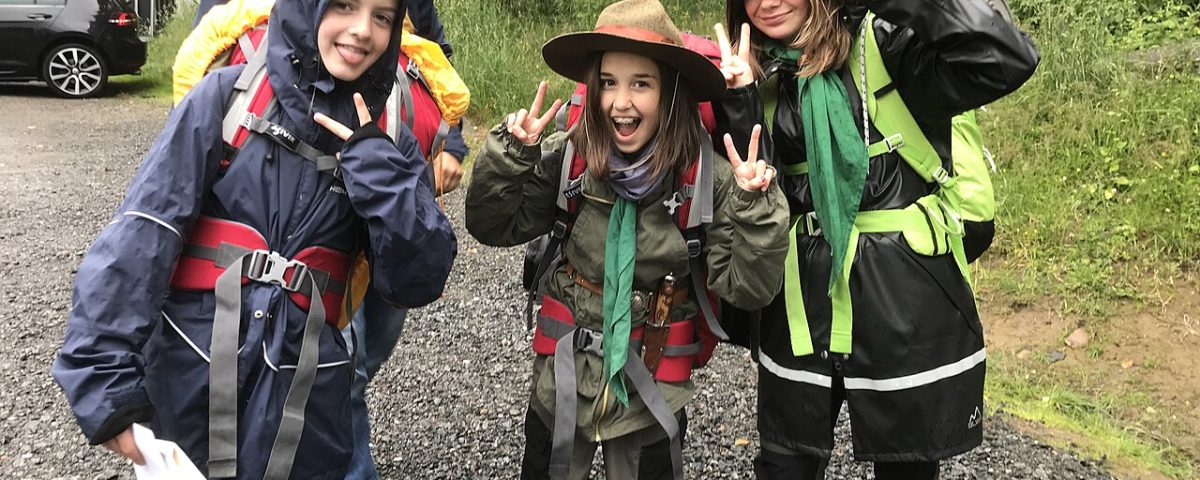
A poncho covers your pack as well as your torso, which is the single biggest advantage it has. A jacket plus a pack cover is two items, two failure points, and a gap at the lower back where water runs between them. A poncho that reaches below the top of the pack eliminates that gap entirely.
Ventilation is the second advantage. A poncho hangs away from the body, so air moves underneath and condensation has somewhere to go. In warm rain, this is the difference between damp and soaked. It also goes on over everything in seconds, including a helmet or a large pack, which matters when the weather turns fast.
The costs are real. A poncho catches wind like a sail, snags on brush, and blinds your peripheral vision when you turn your head. On an exposed ridge it is a liability, and in dense scrub it will be shredded or pulled off your shoulders within a kilometre. It is a tool for forest, farmland, and camp, not for wind.
What actually matters on a jacket
Pit zips come first. A jacket without them is only usable in cold, static conditions, which is a narrow slice of real weather. Two-way zips that open from the bottom help when you are wearing a harness or a pack belt, and a full-length front zip that can be opened at the neck while closed at the chest gives you fine control.
The hood is second. It needs a wire or stiffened brim to keep rain off your face, a volume adjuster at the back, and a cut that turns with your head rather than sitting on it like a bag. A hood that collapses in wind is worse than a hat.
Then the details. Cuffs that adjust with one hand, a hem drawcord you can reach with a pack on, and pockets placed above a hip belt so they are still usable. Two-layer fabric is fine for general use; three-layer is more durable and less clammy but heavier and more expensive. Neither is twice as good as the other.
Brush, packs, and abrasion
Waterproof fabric fails at the shoulders first, where pack straps rub, and at the forearms, where brush catches. A lightweight shell worn under a loaded pack on a scrubby route can lose its water resistance in a couple of seasons even though nothing has torn. Reinforced shoulders help; so does not wearing your best shell for pushing through alder.
Packs are the other problem. A pack worn over a shell compresses the fabric against your back and stops vapour movement exactly where you sweat most. Ventilated back panels help, but the practical fix is to open the front zip on climbs, take the pack off at every stop, and accept a damp back as normal.
Repair and re-proofing
Washing a shell is maintenance, not damage. Dirt and body oils clog the surface and mask the water repellent finish, and a jacket that has stopped beading often recovers after a proper wash with a technical cleaner and a low tumble dry. Avoid fabric softener and biological detergent, which leave residues that attract water.
Re-proofing sprays and wash-in treatments restore the beading but do not renew a worn membrane. Pinholes and delamination at seams are permanent, and a jacket that wets through at the shoulders in a twenty-minute shower has reached the end of its useful life as rain gear. It can still serve as a wind layer.
When this fails
Both options fail in sustained wind-driven rain. A poncho becomes a sail and a jacket wets out at the shoulders under pack straps, and neither keeps you dry if you are generating enough heat to soak your base layer from inside. In that conditions the answer is a shelter, a change of clothes in a dry bag, and a plan that does not depend on staying dry.
Ponchos fail hardest in brush and on bikes, where snagging is constant and visibility matters. Jackets fail hardest when you need to cover a pack, when the temperature is high, and when the trip is long enough that the fabric never fully dries between days.
The useful habit is to treat the shell as one part of a system with the base layer and the pack cover, and to test the whole arrangement on a wet day close to home rather than on the trip where it counts.