Fixed Blade vs Folding Knife for Field Use: Where Each Fails
The knife question is usually framed as a choice between two tools. In practice it is a choice between two sets of failure modes: a folding knife fails at the pivot under load, and a fixed blade fails at everything that needs precision and a pocket. Which failure you can live with depends on where you are going and what you expect your hands to do there.
What field knife work actually is
Count the cuts on a normal trip. Opening food packets, shaving tinder, cutting cord, trimming a plug of fatwood, notching a pot hook. Nearly all of it is light work at close range, done with cold or wet hands, often in bad light. Very little of it needs a thick spine or a twelve centimeter blade.
That gap between what people buy for and what they do is why so many large fixed blades spend the trip in the pack. The tool that gets used is the one already in reach when a job appears for eight seconds.
Where a fixed blade wins
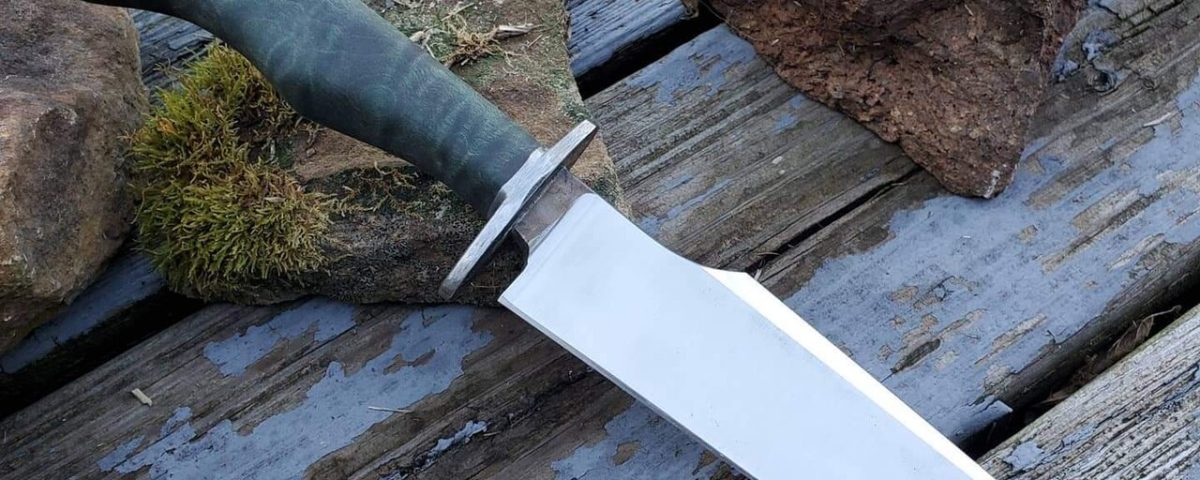
A fixed blade has no lock to fail and no pivot to fill with grit. It can be cleaned properly, it works with heavy gloves, it opens one-handed without a technique, and it tolerates being pried, twisted, and struck. If you are processing wood, making wedges, or carving a notch that needs force, the fixed blade is the correct tool and the folder is a liability.
Its real cost is carry. A fixed blade in a sheath is a belt item, not a pocket item, and a belt item announces itself. That matters in towns, on public transport, and anywhere a visible knife changes how people treat you before you have said a word.
Where a folder wins
A good folding knife disappears into a pocket and is with you at the hardware store, the campsite, and the trailhead. A locking folder with a one-hand opener covers the light-work majority, and a shorter blade is genuinely better for fine carving and for food. The limitation is structural: any folding mechanism concentrates force on a small area, and the lock is a spring, a wedge, or a liner, all of which can be defeated by shock or by a twisting load.
The other advantage is social and legal friction. Blade length rules, lock type rules, and local interpretation vary widely, and a closed folder in a pocket is easier to explain than a sheath knife on a belt in a parking lot.
The failure conditions to plan around
A folding knife used to baton is a hand injury waiting for a date. The spine takes the strike, the lock takes the shock, and when the lock releases the blade closes on the fingers holding the handle. If the wood needs splitting and there is no fixed blade, drive a wedge and baton the wedge, not the knife.
A fixed blade fails in the opposite direction: too much blade for the work. A thick scandi grind on a long blade is a poor tool for slicing food or making a clean cut in thin material, and the owner ends up using their teeth on packaging. Grind and stock thickness matter more than length for general camp work. Thin stock with a flat grind cuts; thick stock with a short bevel splits.
Cold and wet break the pattern from both sides. With gloves, small folders with recessed nail nicks become two-handed tools. With wet hands, smooth handles on either pattern turn dangerous. Textured scales and a finger groove are not cosmetic details.
Carrying both, honestly
The combination that covers the most ground is a small fixed blade of nine to eleven centimeters in a flat sheath, plus a compact folder in a pocket. The fixed blade handles wood and rough work; the folder does everything else and is the one actually present when the job appears.
Maintenance is part of the choice. Carbon steel takes a keen edge easily and rusts if you look at it wrong. Stainless shrugs off wet conditions and takes more effort to restore. Neither is better in the abstract. If the knife lives in a wet climate and gets cleaned rarely, stainless is the practical answer, and if you enjoy sharpening, carbon rewards you.
Sharpening matters more than either choice. A modest knife kept sharp outperforms a premium one that has been dull since the second trip, and a sharp knife needs less force, which is where most cuts come from in the first place.
A word on the sheath, since it is half the system. A fixed blade that rattles loose, hangs below the knee, or needs two hands to reinsert will get carried in the pack instead of on the belt. Retention that holds the knife upside down and still releases with a thumb is the standard to look for.
Pick the failure you can manage. If the trip involves wood and weather, take the fixed blade. If it involves a town at either end, the folder is the one that will be in your pocket when it counts.