Controlling Bleeding in the Field: Pressure, Packing, and Time
Bleeding is the field injury that kills quickest, and it is also the one where a bystander with training and a dressing can make the largest difference. This is not medical advice, and nothing here replaces a hands-on course; severe bleeding needs emergency services as fast as you can get them.
The order of operations
Safety first, then bleeding, then everything else. A rescuer who becomes a second casualty helps nobody, so look at the scene before you kneel in it: traffic, unstable ground, machinery, whatever caused the injury. Then expose the wound, because you cannot treat what you have not seen, and blood in clothing hides the actual rate of loss.
Then work through three steps in order, escalating only as needed. Direct pressure on the wound. Wound packing if the bleeding is deep and the pressure is not controlling it. A tourniquet for a limb bleed you cannot stop by the first two methods. Each step is a response to the previous one failing, not a menu to choose from.
Direct pressure, done properly
Press hard, directly on the wound, with a dressing or a clean cloth, and hold it. The common error is pressing gently and then lifting the dressing to look, which disrupts the forming clot and restarts the bleeding. Hold for a sustained period, several minutes at least, and add more dressing on top if it soaks through rather than removing what is already there.
Position matters. If possible, lay the casualty down and keep the injured part at or slightly above the level of the heart, which reduces pressure at the wound. Elevation alone does not stop arterial bleeding, and it is not a substitute for pressure. Pressure does the work.
Pressure dressings with a built-in pad and bandage are worth carrying because they let you maintain pressure while doing something else, such as calling for help. A dressing you have to keep your hand on for twenty minutes is a dressing that stops being applied the moment you need both hands.
Packing a deep wound
Deep wounds in the groin, armpit, neck, and buttock cannot be controlled by surface pressure because the bleeding vessel is deeper than the surface. These junctional wounds need packing: gauze pushed firmly into the wound, all the way to the bleeding point, until the cavity is filled, then sustained pressure on top for several minutes.
Hemostatic gauze impregnated with a clotting agent is widely carried for this and is generally easier to use than plain gauze, though plain gauze packed correctly works too. The technique is the same either way: get the material to the source, fill the space, press hard, hold. Packing timidly into the top of a wound does nothing.
Do not remove packing once it is in. If bleeding continues through it, add more on top and increase pressure, and get help moving.
The tourniquet, and when it is the right call
A tourniquet is for life-threatening bleeding from a limb that pressure and packing have not controlled, or for a limb injury where the rate of loss is so fast that there is no time to try anything else. Applied properly it is safe for hours, and the old fear of losing a limb to a tourniquet has cost more lives than it has saved.
Place a manufactured windlass tourniquet high and tight on the limb, several centimeters above the wound and not over a joint, tighten until the bleeding stops, and secure the windlass. It will hurt, and the casualty will complain; that is expected and not a reason to loosen it. Write the time of application on the tourniquet or on the casualty’s forehead, because the next responder needs it.
A second tourniquet beside the first is the correct response to a tourniquet that does not stop the bleeding, not loosening and reapplying. Improvised tourniquets from cord, belts, or clothing are a last resort, and a narrow cord without a wide band can cut into tissue without occluding the artery.
What not to do
Do not remove an object that is impaled in a wound; pack around it and stabilize it. Do not put dirt, ash, coffee grounds, or a finger into a wound. Do not use a tourniquet for a bleed that pressure controls, because the pressure is easier on the patient and the limb. Do not give food or drink to a seriously injured person, in case surgery is needed.
Do not raise the legs of someone in shock as a treatment; keep them warm, lying flat, and get help. And do not spend time cleaning a wound that is still bleeding: stop the bleeding first, clean later.
After the bleeding stops
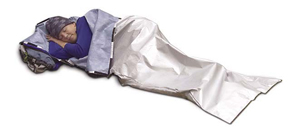
Cover the wound, keep the casualty warm, and monitor. Cold is a real risk after major blood loss, so a blanket or a jacket matters even in mild weather. Record what you did and when, including the tourniquet time, and hand that information over clearly. Responders need the timeline more than they need the story.
Every one of these skills improves with a course and with practice on a training limb. Reading about packing a wound and doing it under pressure are different activities.
When this approach fails
It fails with internal bleeding, where there is nothing to press on and the only treatment is rapid evacuation. It fails with a wound in a location you cannot pack, such as high in the neck, where the correct action is direct pressure and immediate transport. It fails when the kit is in the pack and the pack is fifty meters away, which is why a small dressing and gloves belong on your person.
And it fails when the kit is unfamiliar. A tourniquet you have never opened, gauze still in its wrapper inside a vacuum-sealed pouch, gloves that tear: all of these cost seconds that a severe bleed does not give you. Open the kit, handle the contents, and take a course.
The realistic goal is not to be a paramedic. It is to stop the bleeding, keep the person warm, and get them to someone who can do the rest.